

Microsoft Fabric Data Engineering Services
Last updated: August 26, 2026
Microsoft Fabric Data Engineering Services from Zapai help organizations build, orchestrate, and optimize data pipelines, notebooks, and Spark-based transformation workflows that turn raw data into analytics-ready, AI-ready datasets on OneLake.

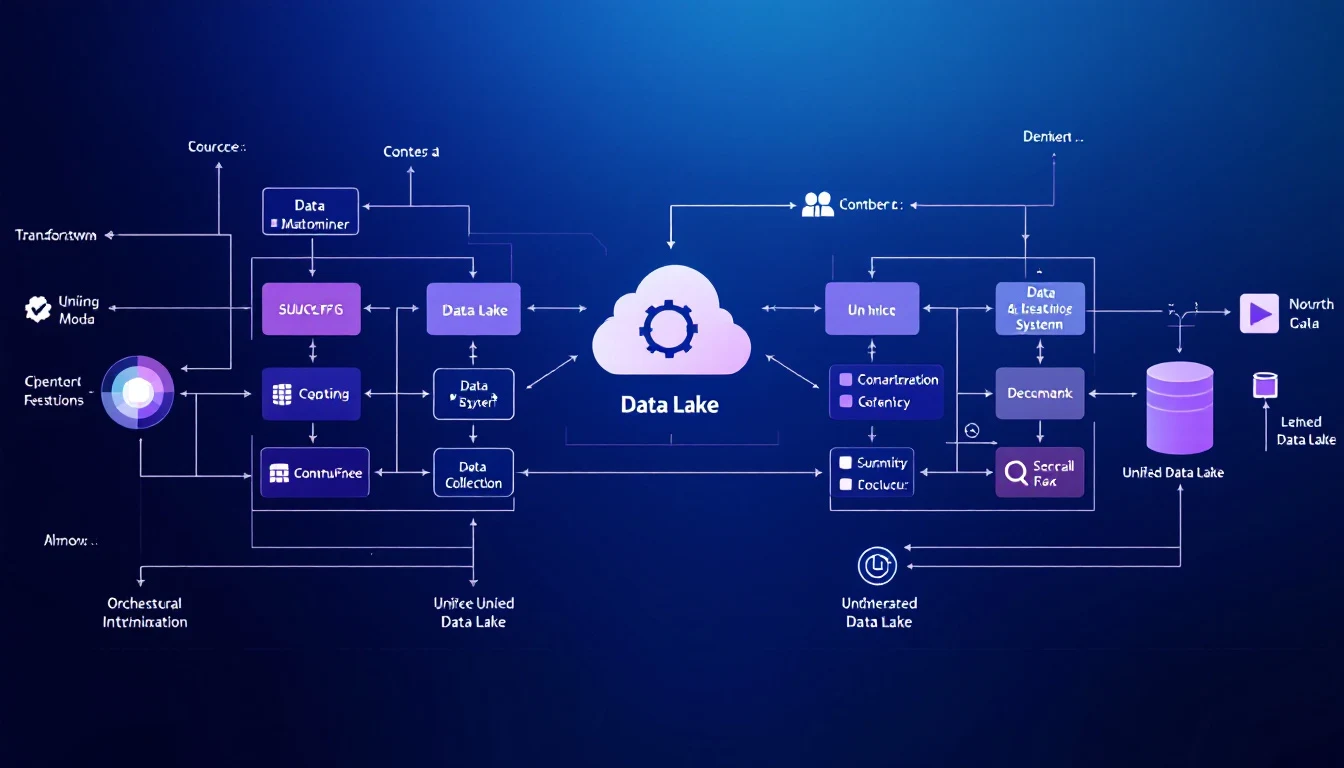
Data engineering is the layer that connects raw source systems to the rest of the Microsoft Fabric estate. It is where data is ingested, cleaned, transformed, and structured before it ever reaches a warehouse, a lakehouse, or a Power BI report. Fabric brings pipelines, notebooks, Dataflows Gen2, and Spark compute together into one SaaS platform, removing the need to stitch together separate ETL tools, clusters, and orchestration engines.
At Zapai, we design and build data engineering workflows on Microsoft Fabric that are scalable, governed, and maintainable — from first ingestion through CI/CD-managed deployment.
What Is Data Engineering in Microsoft Fabric?
Data engineering in Microsoft Fabric covers the tools and processes used to move, transform, and prepare data at scale. Rather than separate ingestion, transformation, and orchestration products, Fabric provides a single, integrated toolset:
- Data pipelines for ingestion and orchestration
- Notebooks for code-based transformation
- Dataflows Gen2 for low-code transformation
- Spark job definitions for scheduled batch jobs
- Autoscaling Spark compute
- Git-based version control and CI/CD
Every one of these tools writes to and reads from OneLake, so engineering work is immediately available to the rest of the Fabric estate without duplicate copies or manual handoffs.
Why Choose Microsoft Fabric for Data Engineering?
Microsoft Fabric unifies data ingestion, transformation, and orchestration in a single SaaS platform built on Delta Lake and OneLake, replacing fragmented ETL stacks with one governed environment.
- Unified pipelines, notebooks, and dataflows in one workspace
- Autoscaling Spark compute with no cluster management
- Native support for PySpark, Spark SQL, and Scala
- Low-code Dataflows Gen2 for citizen data engineers
- Built-in Git integration and deployment pipelines
- Direct read/write to OneLake in open Delta format
- Integrated monitoring, lineage, and job orchestration
This reduces the number of moving parts data teams have to manage while making transformed data instantly usable across warehousing, lakehouse, and BI workloads.
Our Microsoft Fabric Data Engineering Services
Data Pipeline & Orchestration
We design and build Fabric data pipelines that orchestrate ingestion and transformation across your entire data estate, from source systems to OneLake.
- Pipeline design and orchestration logic
- Scheduled and event-driven triggers
- Source system connectors (ERP, CRM, databases, APIs)
- Parameterized and reusable pipeline templates
- Error handling and retry logic
Notebook-Based Data Transformation
We build large-scale transformation logic using Fabric notebooks with PySpark, Spark SQL, and Scala for teams that need full code-level control.
- PySpark and Spark SQL transformation logic
- Scala-based processing where required
- Reusable notebook libraries and functions
- Notebook scheduling via pipelines
- Performance-tuned Spark code
Dataflows Gen2 Implementation
For teams that need low-code transformation, we implement Dataflows Gen2 workflows that make data preparation accessible to analysts and citizen data engineers.
- Power Query-based transformation logic
- Reusable dataflow templates
- Incremental refresh configuration
- Data destination mapping to OneLake
- Governance-aligned dataflow design
Lakehouse Architecture & Delta Lake
Our data engineering work is built directly on Fabric lakehouses and the open Delta Lake format, keeping transformed data queryable, versioned, and shareable.
- Delta table design and partitioning strategy
- Medallion (bronze/silver/gold) layer architecture
- Schema evolution and versioning
- Table optimization and maintenance jobs
- OneLake shortcuts to external data sources
Spark Performance Optimization
We tune Spark job definitions and autoscaling compute pools so transformation jobs run reliably and cost-effectively at enterprise data volumes.
- Spark pool sizing and autoscale configuration
- Partitioning and shuffle optimization
- Job execution plan tuning
- Caching and memory management
- Cost-aware compute scheduling
CI/CD & Git Integration for Data Engineering
We set up Git integration and deployment pipelines so pipelines, notebooks, and dataflows move safely from development through test to production.
- Git-connected Fabric workspaces
- Branch-based development workflows
- Deployment pipeline configuration (dev/test/prod)
- Automated validation before promotion
- Version history and rollback support
Data Quality & Monitoring
We implement monitoring, lineage tracking, and validation checks so data engineering teams can trust — and troubleshoot — every pipeline run.
- Pipeline run monitoring and alerting
- Data lineage tracking across pipelines and notebooks
- Data quality validation rules
- Job failure diagnostics and logging
- SLA and freshness monitoring
Migration to Fabric Data Engineering
We help teams move existing ETL/ELT workloads — from tools like SSIS, Azure Data Factory, or Databricks — onto Microsoft Fabric with minimal disruption.
- Existing pipeline and job inventory assessment
- Migration strategy and sequencing
- Pipeline and notebook re-platforming
- Parallel-run validation
- Cutover planning and support
Support & Managed Services
Once your data engineering workflows are live, we provide ongoing monitoring, optimization, and support to keep pipelines running reliably.
- Ongoing pipeline and Spark job monitoring
- Performance and cost optimization
- Issue triage and resolution
- Capacity planning
- Continuous enhancements as data volumes grow

Key Features of Microsoft Fabric Data Engineering
Microsoft Fabric brings together the core capabilities data engineering teams need in one connected environment.
Unified Pipeline Orchestration
Build and schedule ingestion and transformation pipelines from a single, connected workspace.
Code-First Notebooks
Transform data at scale using PySpark, Spark SQL, or Scala with full version control.
Low-Code Dataflows Gen2
Give analysts and citizen data engineers Power Query-based transformation without writing code.
Autoscaling Spark Compute
Run large-scale transformation jobs on managed, autoscaling Spark pools with no cluster administration.
Native Git Integration
Connect Fabric workspaces to Git for branching, version history, and safe collaboration.
CI/CD Deployment Pipelines
Promote pipelines, notebooks, and dataflows through dev, test, and production automatically.
Built-In Lineage & Monitoring
Track how data moves and transforms across every pipeline, notebook, and dataflow run.
Delta Lake-Native Storage
Write every transformation output directly to OneLake in the open, interoperable Delta format.
Benefits of Microsoft Fabric Data Engineering Services
A well-built Fabric data engineering layer changes how quickly and reliably raw data becomes usable across the business.
- Faster time from raw data to analytics-ready datasets
- Less infrastructure to manage with SaaS Spark compute
- Lower total cost versus fragmented ETL tooling
- Higher data quality and consistency across pipelines
- Safer, faster deployments through CI/CD
- Better collaboration between engineers and analysts
- Compute that scales with growing data volumes
- Full lineage and auditability of every transformation
These gains compound as more of the business relies on the same governed OneLake data instead of duplicated, tool-specific copies.

Industries We Serve
Zapai delivers Microsoft Fabric Data Engineering solutions across multiple industries, tailoring pipeline and transformation design to each sector’s data sources and compliance needs.
Manufacturing
Healthcare
Retail
Banking & Finance
Logistics & Supply Chain
Real Estate
Technology
E-commerce
Education

Why Choose Zapai for Data Engineering Services?
Zapai combines deep Microsoft Fabric expertise with hands-on data engineering experience to deliver pipelines and transformation workflows that hold up at production scale.
- Certified Microsoft Fabric specialists
- End-to-end pipeline, notebook, and dataflow implementation
- Experience migrating legacy ETL/ELT workloads to Fabric
- Spark and PySpark performance tuning expertise
- CI/CD-driven, Git-based delivery approach
- Industry-specific pipeline design
- Ongoing support and optimization
We help data teams build engineering workflows that feed clean, governed data into every downstream Fabric workload. Explore our broader Microsoft Fabric services to see how data engineering fits into your overall data strategy.
Frequently Asked Questions
What is data engineering in Microsoft Fabric?
It is the set of tools — pipelines, notebooks, Dataflows Gen2, and Spark compute — used to ingest, transform, and orchestrate data before it reaches warehouses, lakehouses, or reports.
How does Fabric handle large-scale data transformation?
Fabric runs transformation logic on autoscaling Spark compute through notebooks (PySpark, Spark SQL, Scala) or Spark job definitions, writing results directly to OneLake in Delta format.
What’s the difference between Dataflows Gen2 and notebooks in Fabric?
Dataflows Gen2 offer low-code, Power Query-based transformation for analysts, while notebooks give data engineers full code-level control using PySpark, Spark SQL, or Scala.
Can Zapai migrate our existing ETL pipelines to Microsoft Fabric?
Yes. Zapai assesses existing ETL/ELT workloads and re-platforms pipelines, notebooks, and jobs onto Microsoft Fabric with parallel-run validation before cutover.
Does Fabric support CI/CD for data engineering workflows?
Yes. Fabric workspaces integrate with Git and support deployment pipelines that promote pipelines, notebooks, and dataflows across development, test, and production.
How does Fabric data engineering integrate with OneLake?
Every pipeline, notebook, and dataflow reads from and writes to OneLake in open Delta format, so transformed data is instantly available across the whole Fabric estate.
Build Reliable Data Engineering Workflows with Zapai
Turn raw, scattered data into clean, governed, analytics-ready datasets with Microsoft Fabric Data Engineering Services from Zapai. Automate ingestion, transformation, and deployment with pipelines, notebooks, Dataflows Gen2, and CI/CD built on OneLake.