


Last updated: August 26, 2026
A Power Platform consulting engagement typically runs through four stages: a discovery and scoping phase that produces a scope document and cost range, a build phase priced as fixed-fee, time-and-materials, or milestone-based (commonly $100K–$500K for a full implementation over 12–24 weeks), a governed rollout with training, and ongoing post-launch support. What separates a good partner from a bad one shows up in the first two weeks, before a single app gets built.
Most companies calling a Power Platform consultant have never bought this kind of work before. They know they want fewer manual spreadsheets and faster approvals, but they don’t know what a proposal should contain, what a fair price looks like, or what red flags to watch for before signing anything. ZapAI’s Power Platform services exist to close exactly that gap, and this is the honest walkthrough of what an engagement actually looks like from first call to post-launch support.
We’re going to skip the sales-page version of this. Here’s what to expect, in order, including the parts most consulting firms don’t put on their website.
What’s Actually Included in a Power Platform Engagement
“Power Platform consulting” covers a wider scope than most buyers expect walking in. It’s not just someone building an app. A real engagement covers the strategy, planning, and hands-on work needed to get real value out of Power Apps, Power Automate, Power BI, and Power Pages together, not as four separate purchases.
In practice, that means a consulting partner is typically responsible for:
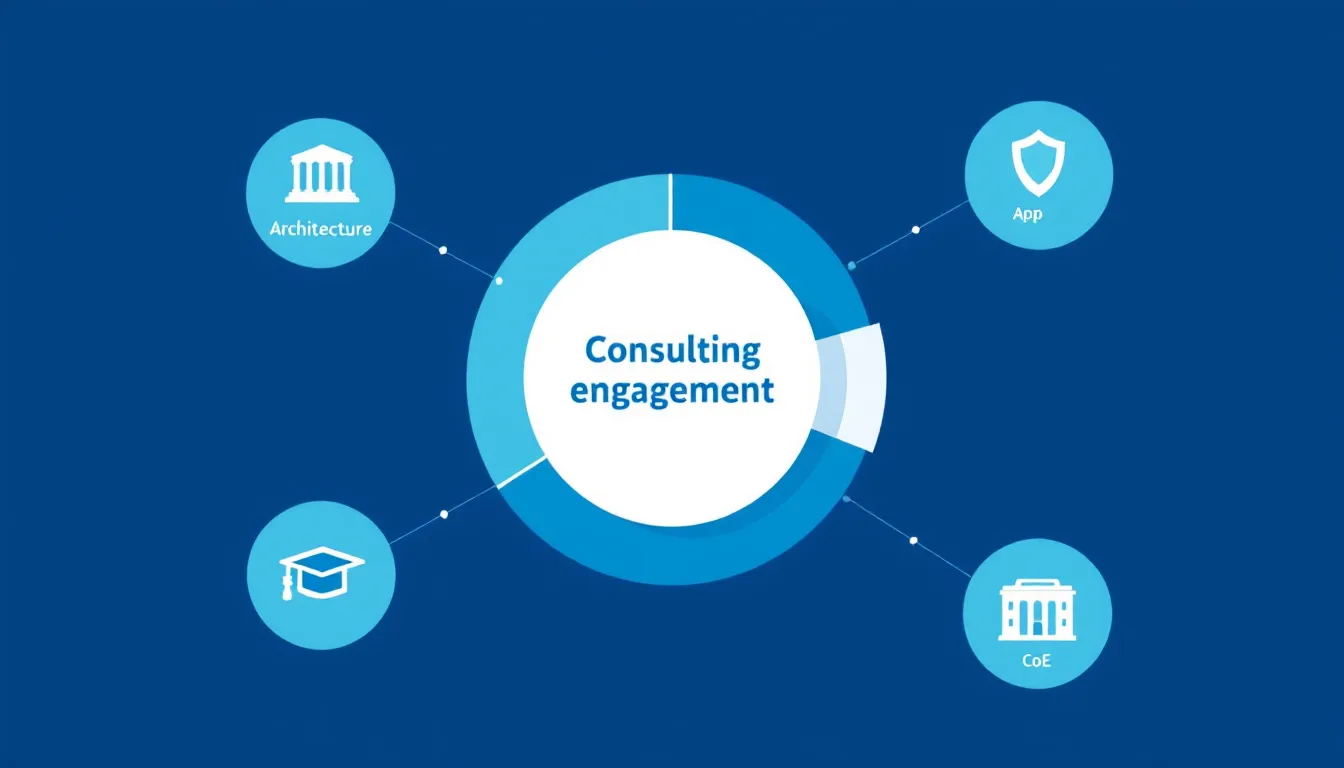
- Solution architecture, including how Dataverse, connectors, and existing systems fit together
- Environment strategy and Data Loss Prevention (DLP) policy design before a single flow gets built
- The actual build: apps, flows, dashboards, and any AI Builder or Copilot Studio components
- Licensing guidance so you’re not surprised by a premium connector requirement mid-project
- Citizen-developer training so your team can maintain what gets built
- Governance setup, often modeled on a Center of Excellence structure
That last point matters more than it sounds. A partner who quietly skips governance to hit a deadline is setting you up for the exact app sprawl problem Power Platform is supposed to prevent.
The Discovery and Scoping Phase
Before any contract gets signed for build work, a competent partner runs discovery. The purpose of this phase is to research the business need and define scope before committing to a cost, not after. Skip this and you’re buying a guess.
A proper scoping engagement should leave you with a process map, a user model, licensing assumptions, architecture options, delivery responsibilities, and an initial total-cost range. If a firm proposes a fixed price on your very first call, before they’ve asked who touches the process today or what systems it needs to connect to, that’s not confidence. That’s a guess wearing a suit.
Good discovery digs into specifics: the pain points you’re actually trying to solve, the existing systems that need to connect, the data that needs to move between them, and the people who’ll actually use what gets built. A thorough partner also runs an integration assessment during this phase to confirm every required connection is technically feasible and flag any connector that needs a premium license before it becomes a budget surprise later.
Some firms formalize this with a readiness gate: green means ready to approve full build budget, amber means more discovery is needed, red means the scope isn’t defined clearly enough to price at all. You don’t need the exact framework, but you should expect your partner to tell you honestly which color you’re at before asking for a signature.
Engagement Models and What They Actually Cost
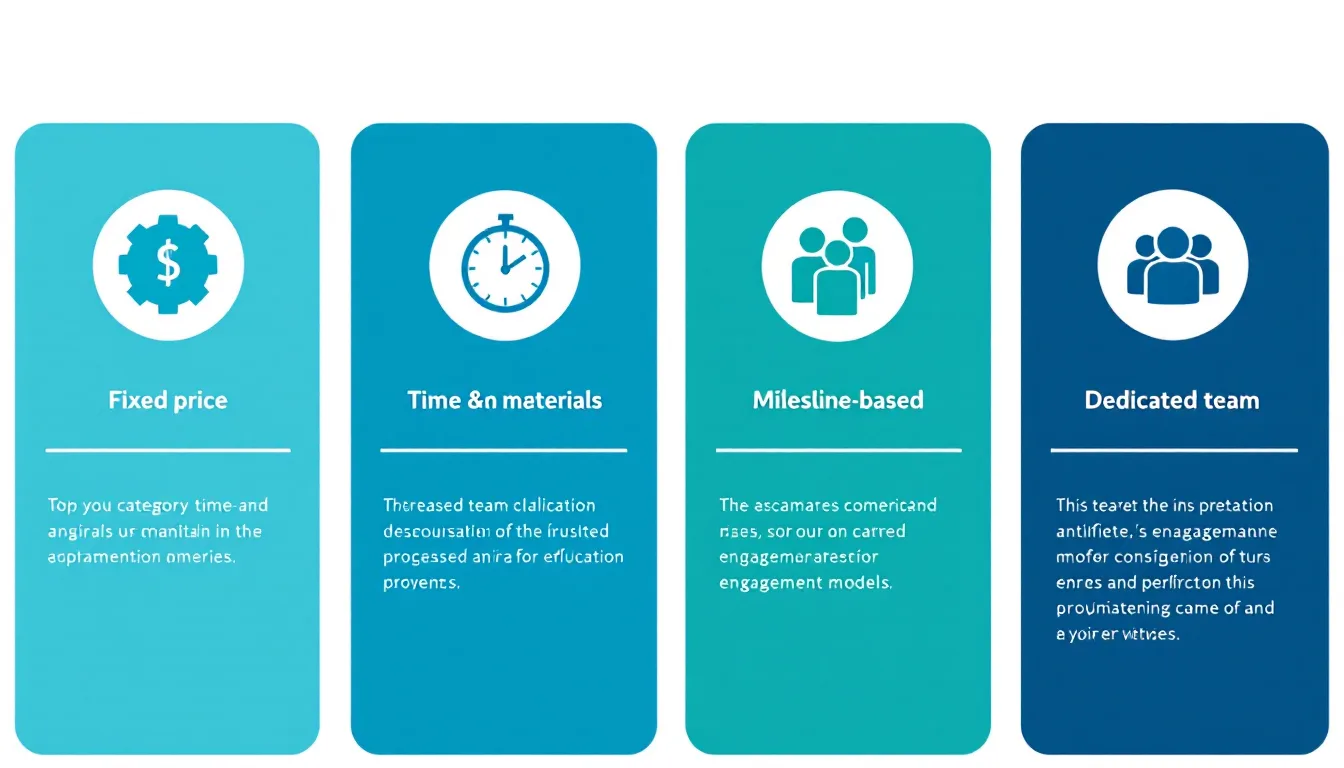
Power Platform consultants typically offer some combination of four models: fixed cost, time and materials, milestone-based, and dedicated team. Which one fits depends on how well-defined your scope already is.
- Fixed price works when scope is genuinely locked. You get one number, and pricing eliminates scope creep and aligns incentives around delivery speed since the risk of an overrun sits with the vendor, not you.
- Time and materials makes more sense for early-stage discovery or genuinely uncertain scope, where locking a fixed number too early just means someone pads the estimate to cover their risk.
- Milestone-based splits the difference: you pay as defined chunks of work land, which keeps a fixed-price feel without pretending the whole project is fully scoped on day one.
- Dedicated team / managed services is a different animal entirely, an ongoing retainer rather than a project, usually for CoE management, governance, and continuous app support after the initial build.
On real numbers: a full Power Platform implementation, including CoE setup, DLP policies, Dataverse data modeling, app development, and citizen-developer training, commonly runs $100,000 to $500,000 as a fixed fee across a 12 to 24 week build. A narrower pilot, a single automation or one app, can land anywhere from a few thousand dollars up to $15,000–$20,000. Ongoing managed services for CoE operations typically run $5,000 to $15,000 a month for a mid-market team with 20 to 50 active apps, climbing toward $25,000 to $100,000+ a month for large enterprises running hundreds of apps.
None of these numbers are guarantees for your specific project. They’re anchors so you can tell whether a quote you’re looking at is in the reasonable range or wildly off in either direction.
What a Realistic Timeline Looks Like
Speed depends heavily on company size and how much governance work has to happen before the build starts. For a small or mid-size business, a first production solution can realistically ship in 6 to 12 weeks. For an enterprise standing up a proper governance foundation first, that stretches to 12 to 20 weeks.
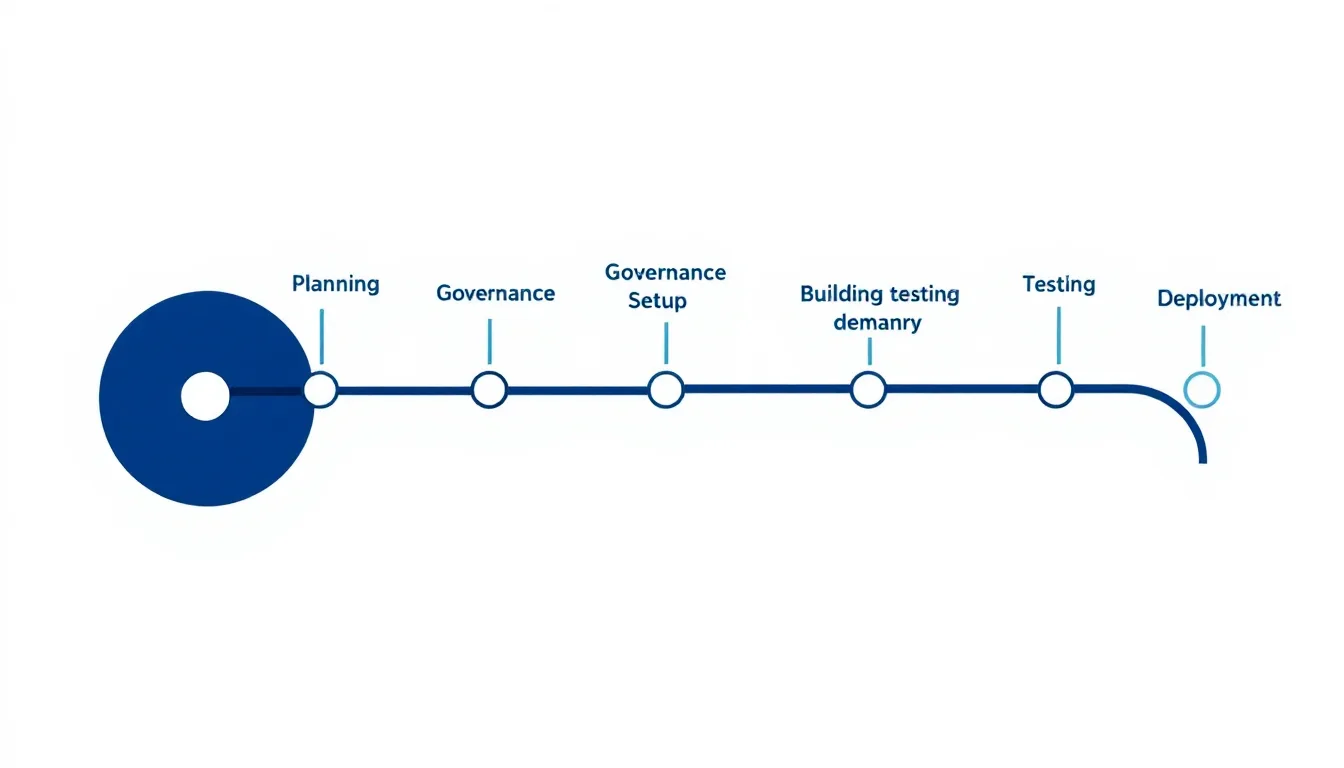
The timeline usually breaks down into five recognizable stages:
- Planning and design, requirements gathering and solution architecture
- Governance setup, environment strategy, DLP policies, and access control, which alone can take 3 to 6 weeks before any visible build work starts
- Building, the actual apps, flows, and reports
- Testing, user acceptance and quality assurance before anything goes live
- Deployment and support, launch plus the adoption work that keeps the solution from going stale
If a proposal skips straight from “kickoff” to “go live” with no governance stage between them, ask why. That missing stage is usually where the technical debt gets buried.
What Deliverables You Should Actually Receive
A finished engagement should hand you more than a working app. Expect a governance framework and DLP policy documentation, a defined environment strategy, the built solution itself, and trained users, not just trained admins. During deployment, a partner worth the fee spends real time answering questions, running training, and helping people get comfortable with the new interface, not just flipping a switch and invoicing.
Ask specifically what documentation, training, and post-launch support are included before you sign. The goal of a good engagement is leaving your internal team capable of making minor changes on their own, not permanently dependent on the firm that built it.
How to Evaluate a Power Platform Consulting Partner
Credentials are the easiest filter, and also the one people check last. At the company level, look for Microsoft Solution Partner designation for Business Applications, which requires a partner to clear a 70-point capability score across performance, skilling, and customer success metrics, not just a badge someone bought. At the individual level, look for named consultants holding current Power Platform certifications.
Credentials only get you in the room. Past that, evaluate on:
- Track record in your industry or with a similarly-shaped project, not just a generic portfolio
- Whether they lead with your business outcomes and KPIs, or jump straight to technical architecture without asking what success looks like for you
- Integration depth with the systems you already run, ERP, CRM, whatever your data actually lives in today
- Willingness to share real client references, not just logos on a slide
The strongest signal is how a firm talks about governance and knowledge transfer before you’ve asked about either. A partner focused on your long-term ownership of the solution will bring it up unprompted.
Red Flags That Signal a Bad Engagement
A few patterns show up again and again in engagements that go sideways, and all of them are visible before you sign anything.
A partner that glosses over governance and security, DLP policies, environment strategy, connector governance, is optimizing for speed of delivery over long-term stability. That trade might feel fine in month one and expensive in month twelve.
A proposal with no training and no post-launch support baked in is a proposal optimized for billable hours, not outcomes. Implementation without ongoing support tends to produce stale dashboards and quietly declining adoption within a few months of go-live. And if a firm is reluctant to share case studies or put you in touch with a past client, treat that as an answer in itself.
What Happens After Launch
The engagement doesn’t end at go-live, or it shouldn’t. Adoption is a change management problem as much as a technical one: it’s the structured work of moving people from their current habits to a new tool, and it doesn’t happen automatically just because the app works.
A partner still engaged post-launch should be doing three things: monitoring actual usage and performance, collecting feedback from the people using it daily, and iterating on the solution as requirements shift. A phased rollout, starting with a pilot group before a full rollout, tends to produce smoother adoption than a big-bang launch to everyone at once, since it gives you room to fix training gaps before they scale.
If you’ve already scoped which processes are worth automating before your first consulting call, discovery moves faster and the resulting proposal is sharper, because you’re not asking a consultant to do your prioritization work for you on the clock.
FAQ
How much does Power Platform consulting cost?
It depends heavily on scope. A narrow pilot project can run a few thousand dollars up to roughly $15,000–$20,000, while a full implementation with governance, Dataverse modeling, and training commonly falls between $100,000 and $500,000 as a fixed fee. Ongoing managed services typically run $5,000 to $15,000 a month for a mid-market team, scaling higher for large enterprises.
How long does a Power Platform implementation take?
A first production solution usually ships in 6 to 12 weeks for a small or mid-size business, and 12 to 20 weeks for an enterprise that needs a full governance foundation built first. Governance setup alone, environment strategy, DLP policies, and access control, can take 3 to 6 weeks before visible build work even starts.
What’s the difference between fixed price and time-and-materials pricing?
Fixed price locks in one total cost for a clearly defined scope, which shifts overrun risk to the consulting firm. Time and materials bills for actual hours and resources used, which fits better when scope is still uncertain, like an early discovery phase, because locking a number too early usually means the estimate gets padded to cover risk.
What should be included in a Power Platform discovery phase?
A proper discovery phase should produce a process map, a user model, licensing assumptions, architecture options, delivery responsibilities, and an initial cost range, all before you’re asked to sign off on a build budget. It should also include an integration assessment confirming which connectors are feasible and which need premium licensing.
How do I know if a Power Platform consulting partner is legitimate?
Check for Microsoft Solution Partner designation for Business Applications at the company level and current Power Platform certifications at the individual consultant level. Beyond credentials, a legitimate partner leads with governance and knowledge transfer unprompted, shares real client references without hesitation, and includes training and post-launch support in the proposal rather than treating them as optional add-ons.
What happens after the Power Platform solution goes live?
A good partner stays engaged after launch to support adoption through change management, monitor real usage, collect user feedback, and iterate on the solution as needs shift. Engagements that end the moment the app works tend to see adoption decline within months as the solution goes unmaintained.
Ready to see what a real scoping conversation looks like instead of a sales pitch? Talk to ZapAI’s Power Platform team and find out what your project actually costs before you commit to anything.